PUBLICATIONS
EFIRM publications
and research evidence.
EFIRM (Electric Field-Induced Release and Measurement) research and related liquid biopsy publications across research groups. Explore studies of epidermal growth factor receptor (EGFR) mutations, circulating tumor DNA (ctDNA) and other biomarkers.
The publication library.
Explore EFIRM studies, reviews and related liquid biopsy research. Filter by topic, year or evidence type.
14 publications · newest first
2026
ReviewSaliva
Saliva Liquid Biopsy for Detection of Oral and Systemic Diseases
Choi I, et al.; David T. W. Wong, co-corresponding author
Journal of Periodontal Research
Publication date: 2026-08-25
EFIRM context
Reviews saliva-based liquid biopsy approaches for oral and systemic diseases, including EFIRM and other molecular technologies.
Evidence scope: Review of a research field; not a new validation of an EZLife Bio product.
2025
Review / special reportSaliva
Saliva liquid biopsy for detection of early-stage lesions
Choi I, Yoshida N, Swarup N, Wong DTW
Expert Review of Molecular Diagnostics · 25(10):641–646
Publication date: 2025-09-08
EFIRM context
Discusses EFIRM and sequencing approaches in the developing landscape of salivary biomarkers and early lesion detection.
Evidence scope: Special report; does not establish population screening performance or regulatory authorization.
2025
Conference abstractcfDNA
Impact of delayed processing on cell-free (cf) DNA quantity and quality using different cfDNA-stabilizing blood tubes: a Connect for Cancer Prevention Pilot Study Cohort
Bess J, et al.; authors include David Wong, Fang Wei and Feng Li
Cancer Research · 85(8 Supplement 1), abstract 2341
Publication date: 2025-04-15
Direct EFIRM assay
A preanalytical study includes an EFIRM Alu assay alongside other measurements of cfDNA quantity and quality.
Evidence scope: Conference abstract, not a full peer-reviewed research article. Blood-tube and processing conditions matter.
2024
Original researchPathogens
Direct detection of 4-dimensions of SARS-CoV-2: infection (vRNA), infectivity (antigen), binding antibody, and functional neutralizing antibody in saliva
Mohammadi A, et al.; Wong DTW
Scientific Reports · 14:30792
Publication date: 2024-12-28
Direct EFIRM research
Investigates four separate electrochemical assays for viral RNA, antigen, binding antibody and neutralizing antibody signals in saliva.
Evidence scope: Separate singleplex tests, rather than four targets measured simultaneously in one well. The viral RNA workflow includes RT-LAMP amplification and restriction digestion; antibody assays use distinct preparation and readout conditions. Not a clinical testing authorization.
2024
Related researchcfDNA
Single-stranded pre-methylated 5mC adapters uncover the methylation profile of plasma ultrashort Single-stranded cell-free DNA
Cheng JC, et al.; Wong DTW
Nucleic Acids Research · 52(11):e50
Publication date: 2024-06-24
Related liquid biopsy science
Investigates library preparation and methylation profiling of ultrashort single-stranded cfDNA.
Evidence scope: Sequencing methodology; not an EFIRM instrument performance study.
2024
Original researchAutoantibodies
Seronegative patients with primary Sjögren’s syndrome and non-pSS sicca test positive for anti-SSA/Ro52 and -Ro60 in saliva
Kamounah S, Wei F, Park JK, Song YW, Chia D, Wong DTW, Pedersen AML
BBA – Molecular Basis of Disease · 1870(5):167168
Publication date: 2024-04-17
Direct EFIRM research
Evaluates EFIRM-based anti-SSA/Ro52 and Ro60 assays in saliva and plasma from two Danish cohorts.
Evidence scope: Cohort-specific research. Read the associated corrigendum with the original paper.
2023
Original researchEGFR / ctDNA
Single-Droplet Microsensor for Ultra-Short Circulating EFGR Mutation Detection in Lung Cancer Based on Multiplex EFIRM Liquid Biopsy
Wei F, Yu P, Cheng J, Li F, Chia D, Wong DTW
International Journal of Molecular Sciences · 24(12):10387
Publication date: 2023-06-20
Direct EFIRM research
Develops a multiplex single-droplet EFIRM approach for detection of selected ultrashort mutation-containing DNA targets.
Evidence scope: Experimental research configuration; not EFIRM96 product specifications. “EFGR” is retained from the published title.
2021
Original researchFood & agriculture
Detection of soybean transgenic event GTS-40-3-2 using electric field-induced release and measurement (EFIRM)
Zheng Q, Ji C, Liu R, Xu J, Wang Y, Yang A, Zheng W, Cao J
Analytical and Bioanalytical Chemistry · 413(26):6671–6676
Publication date: 2021-09-14
Direct EFIRM research
Evaluates EFIRM detection of the GTS-40-3-2 soybean event, including a blinded study of soybean cargo samples.
Evidence scope: Event-specific research and comparison with real-time PCR; not validation of every GMO event or a current commercial kit. Sample preparation remains assay-specific.
2020
Case reportsEGFR / ctDNA
Longitudinal Monitoring of EGFR and PIK3CA Mutations by Saliva-Based EFIRM in Advanced NSCLC Patients With Local Ablative Therapy and Osimertinib Treatment: Two Case Reports
Li N, et al.; Wei F, Wong DTW
Frontiers in Oncology · 10:1240
Publication date: 2020-07-24
Direct EFIRM research
Reports longitudinal molecular observations in saliva from two patients with advanced non-small-cell lung cancer.
Evidence scope: Two case reports cannot establish clinical utility or general monitoring performance.
2020
Original researchEGFR / ctDNA
Electric Field-Induced Release and Measurement (EFIRM): Characterization and Technical Validation of a Novel Liquid Biopsy Platform in Plasma and Saliva
Tu M, et al.; Wei F, Liao W, Wong DTW, Strom CM
Journal of Molecular Diagnostics · 22(8):1050–1062
Publication date: 2020-06-01
Direct EFIRM research
Characterizes EFIRM assays for selected EGFR variants in plasma and saliva, including analytical performance and specimen handling.
Evidence scope: Performance depends on variant, matrix and validated protocol; not a universal platform sensitivity claim.
2020
Original researchFood & agriculture
Rapid PCR-free meat species mitochondrial DNA identification using Electric Field Induced Release and Measurement (EFIRM®)
Tu M, et al.; Liao W
Analytica Chimica Acta · 1099:68–74
Publication date: 2020-02-22
Direct EFIRM research
Investigates PCR-free mitochondrial DNA recognition for meat species identification using an electrochemical assay.
Evidence scope: Food-sample research with assay-specific sample treatment. Not preparation-free, a universal species panel or a current kit specification. Read the associated corrigendum.
2014
Original researchEGFR / ctDNA
Noninvasive saliva-based EGFR gene mutation detection in patients with lung cancer
Wei F, et al.; Wong DTW
American Journal of Respiratory and Critical Care Medicine · 190:1117–1126
Publication date: 2014-11-15
Foundational EFIRM research
A foundational study investigates selected EGFR variants in saliva and plasma from patients with NSCLC.
Evidence scope: Selected variants and study cohorts; does not demonstrate general cancer screening capability.
2013
Original researchExosomes
Detection of exosomal biomarker by electric field-induced release and measurement (EFIRM)
Wei F, Yang J, Wong DTW
Biosensors and Bioelectronics · 44:115–121
Publication date: 2013-06-15
Foundational EFIRM research · UCLA Wong lab
Introduces a field-induced release and electrochemical measurement method for exosome-associated RNA and protein markers in a research setting.
Evidence scope: Experimental exosome work, including a tumor-cell-derived mouse model; not a patient screening validation or a default step in every EFIRM assay.
2009
Related researchElectrochemical biosensing
Electrochemical sensor for multiplex biomarkers detection
Wei F, Patel P, Liao W, et al.; Wong DT
Clinical Cancer Research · 15(13):4446–4452
Publication date: 2009-07-01
Earlier electrochemical research · UCLA collaborators
Investigates simultaneous electrochemical measurement of salivary IL-8 mRNA and protein, establishing an earlier research foundation for biomarker sensing.
Evidence scope: Research on specific salivary biomarkers and study samples; not current EFIRM96 specifications or a general cancer screening claim.
RESEARCH HIGHLIGHTS
Science on the cover.
Two milestones in published electrochemical sensing and liquid biopsy research.
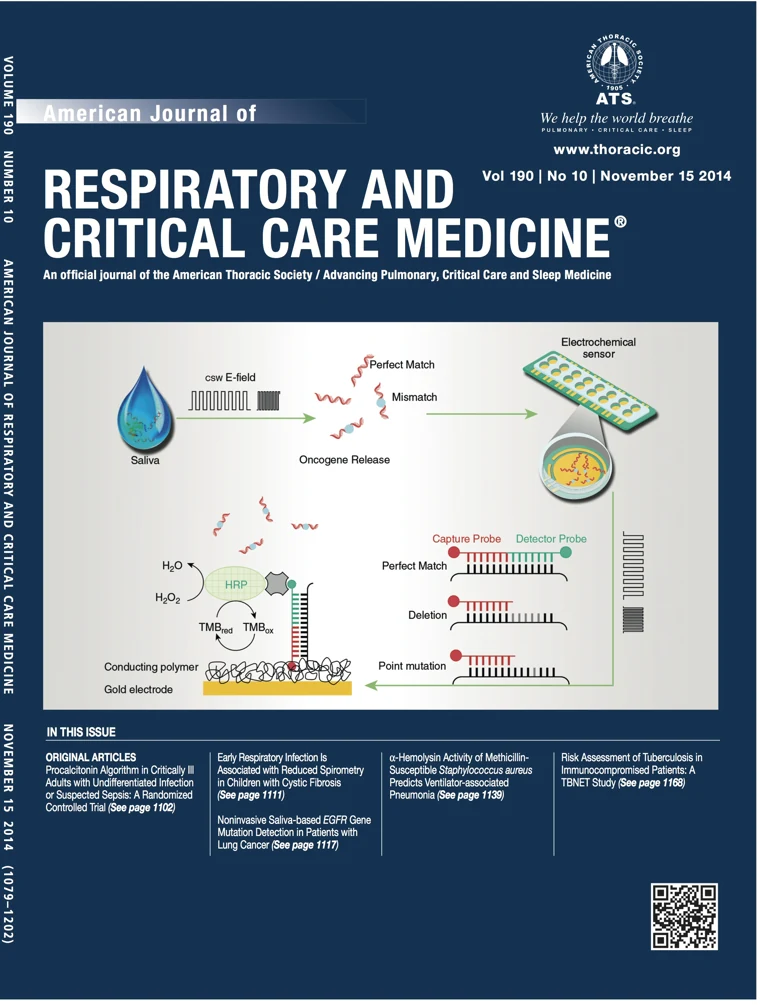
American Journal of Respiratory and Critical Care Medicine
November 15, 2014 · Volume 190, Issue 10
Saliva-based EGFR mutation research
EFIRM research investigated selected EGFR mutations in saliva from patients with lung cancer. The study was featured on the journal’s cover.
Read the study ↗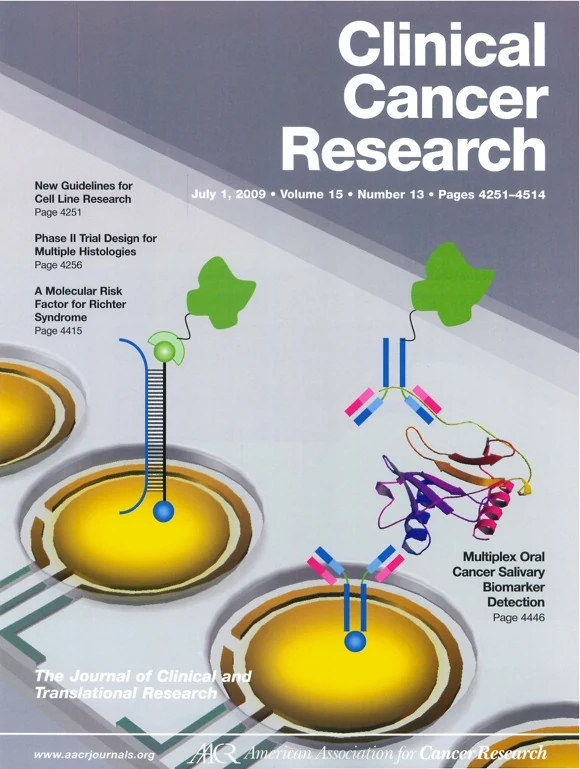
Clinical Cancer Research
July 1, 2009 · Volume 15, Issue 13
Foundations in electrochemical biosensing
Earlier UCLA research measured salivary IL-8 mRNA and protein using an electrochemical sensor. The cover highlights multiplex oral cancer biomarker detection.
Read the study ↗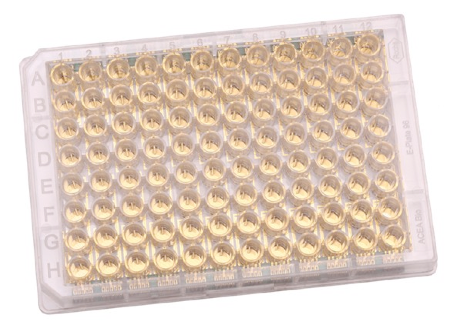
ASSAY / TARGET / MATRIX / CONFIGURATION
Choose the evidence
that fits your study.
Two primary studies provide useful starting points. Read the full methods, controls and analysis before planning an evaluation.
2020Original research · technical validation
Plate-based epidermal growth factor receptor (EGFR) assay characterization
- Target
- Four exon 19 deletion variants, L858R and T790M.
- Matrix
- Plasma and saliva assays; analytical dilution experiments used reference DNA.
- Configuration
- EFIRM E-Plate / E-Reader and the published assay protocol.
- Reported result
- The study reports single-digit-copy detection limits for L858R and T790M, versus 5,000 copies for exon 19 deletion. These are assay- and reference-material-specific findings.
This study does not certify current product performance, clinical utility or a universal detection limit.
Read the 2020 study2023Original research · proof of concept
Single-droplet multiplex EGFR microsensor
- Target
- Synthetic L858R, exon 19 deletion and T790M oligonucleotides.
- Matrix
- Synthetic targets in a model assay; receiver operating characteristic (ROC) analysis here does not measure patient-cohort accuracy.
- Configuration
- The study used a microprinted 96-electrode chip, a custom adapter and an IVIUM multichannel potentiostat. Its results describe that experimental setup, not EFIRM96 product specifications.
- Reported result
- Area under the ROC curve (AUC): 0.98 (L858R), 0.94 (exon 19 deletion), 0.93 (T790M); combined three-target AUC 0.97. AUC is not sensitivity or specificity at a clinical decision threshold.
A research prototype, not a current purchasable kit specification or a validated diagnostic panel.
Read the 2023 studyReviews provide contextThe 2025 and 2026 saliva reviews summarize a developing field. They do not add a new product validation or establish a screening indication.
Explore all publications Research use only. Published target detection without polymerase chain reaction (PCR) uses enzyme-mediated signal generation; it does not copy target DNA. These study results are not specifications for an instrument or assay offered today.
Build on the evidence.
Discuss your research goals, platform needs or a new scientific collaboration.